Good metrology practice#
Metrology ensures that measurements accurately reflect the surrounding environment and should be considered from the very beginning of sensor design. A basic understanding of metrology enables you to efficiently and methodically build a useful sensor, saving a lot of time when it comes to final calibration.
This section includes:
The key organization and some concepts in metrology
Protocol for sensor evaluation tests
A form to help you define your metrology needs (english and french)
Contributions:
Metrology Fundamentals: Organizations and Core Concepts#

Note : For an instrument to be officially recognised for use in research, industry or environmental monitoring, it must be calibrated (see definition below). Calibration is difficult to achieved through DIY methods either due to the lack of technologie either due to the cost (Think about how to get a constant and precise temperature). For final claibration you’ll need to use a certified instrument or to ask a laboratory to do it, which can cost more by the captor itself. In the field of metrology, words are very important. Let’s take a look at the precise meaning of each concept.
▶ Organizations
Reference standards and units are recognized internationally to certify instrument calibration and enable comparable and trustworthy measurements. For instance, temperature is officially measured in kelvin and follows the ITS-90 standard. Metrology in oceanography is an ongoing research field. The latest pH standard was modified in 2015 and is currently under modification (see the LNE latest news). Variables such as turbidity have no international unit or standard. Several actors participate in this progress and research.
The BIPM: Bureau International des Poids et Mesures
The International Bureau of Weights and Measures (French: Bureau international des poids et mesures, BIPM) is an intergovernmental organization through which its 64 member-states act on the International System of Units (SI) and Coordinated Universal Time (UTC). The BIPM works on the global comparability and traceability of measurements in research, industrial manufacturing, international trade, and worldwide quality of life and environment (see more on the BIPM website).
The BIPM provides a list of documents to define key concepts, words, and uncertainty measurements in English and French (accessible here). The files include a dictionary and guides to express uncertainty in measurements and for conformity assessment.
Other Organizations
Other laboratories or organizations such as the Laboratoire national de métrologie et d’essais (LNE) are part of international, European, or national programs to make the standards evolve.
▶ Traceability
Metrological traceability is the “property of a measurement result whereby the result can be related to a reference through a documented unbroken chain of calibrations, each contributing to the measurement uncertainty” [from the VIM by BIPM 2008].
When an instrument is calibrated, a protocol is followed and the process is documented so that it can be recovered. It must be done whatever the level of calibration (Figure 1). It allows tracking the impact of any modification or mistakes. See a clear explanation of traceability on the Adamequipment website.
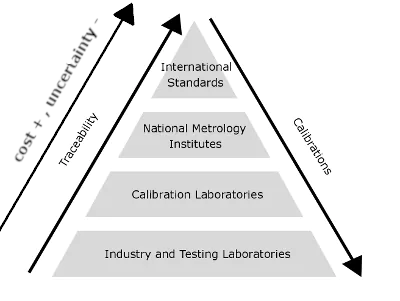
Figure 1 - Traceability pyramid adapted from Adamequipment#
▶ Certification
Certification is the formal recognition that a measuring instrument meets specified requirements and standards. An accredited laboratory performs the calibration process, which includes comprehensive testing and documentation that the instrument performs within acceptable limits.
Certification provides official validation for use in research, industry, or regulatory applications. Find an accredited laboratory on the COFRAC website. At each level in the pyramid (Figure 1), calibration must be traceable.
▶ Uncertainties
Measurement uncertainty is a “non-negative parameter characterizing the dispersion of the quantity values being attributed to a measurand, based on the information used” [from the VIM by [BIPM 2008]].
In other words, uncertainty quantifies the doubt about the result of a measurement. It represents the range of values within which the true value is expected to lie with a given level of confidence. Uncertainty is not error, but it accounts for all possible sources of error in the measurement process. The guidlines to express uncertainty in measurement is describe in the Guide to the expression of uncertainty (GUM). It is good practice to contact accredited laboratories for assistance on this matter.
Note that in-situ measurements are not as precise as laboratory measurements. To reach the desired uncertainty in-situ, a smaller uncertainty has to be reached in a controlled environment. The higher in the pyramid, the more precise a calibration is and the more expensive it becomes to achieve (see Figure 1). Any uncertainties quantified at a given level affect the lower level in the pyramid, and therefore traceability is key for trustworthy measurements.
Understanding and quantifying uncertainty is essential for:
Establishing confidence levels in measurement results
Meeting quality standards and regulatory requirements
▶ Calibration
Calibration is the “operation that, under specified conditions, in a first step, establishes a relation between the quantity values with measurement uncertainties provided by measurement standards and corresponding indications with associated measurement uncertainties and, in a second step, uses this information to establish a relation for obtaining a measurement result from an indication” [from the VIM by BIPM 2008].
In other words, calibration is the process of determining the relationship between the values indicated by a measuring instrument and the corresponding values of a reference standard. This standard can be a calibrated instrument, a CRM (cetified reference material) or a standardised, validates methods used as a reference measurement (which is often the case in chemistry).
During calibration, we establish how the sensor’s output relates to known reference values under controlled conditions (calibration correction and uncetainty quantification).
This process does not involve adjusting the instrument but rather documents its performance characteristics. Note that adjusting the sensor may mask its temporal drift.
These concepts form the foundation for effective sensor characterization and help ensure that oceanographic instruments provide reliable and meaningful data.
Important note: The translation of “calibration” in French is “étalonnage”. Be careful when translating metrology terms between English and French. For instance, “calibration” doesn’t exist in French but we commonly use it. The meaning would be different depending on your interlocutor and for some people, in French, calibration involves adjusting the instrument.
▶ Absolute vs relative accuracy
Relative accuracy describes how consistent and precise measurements are within the same dataset (Figure 2). Absolute accuracy, on the other hand, measures how closely the data aligns with real-world coordinates. The best instrument is precise (good absolute accuracy) and precise (good relative accuracy).
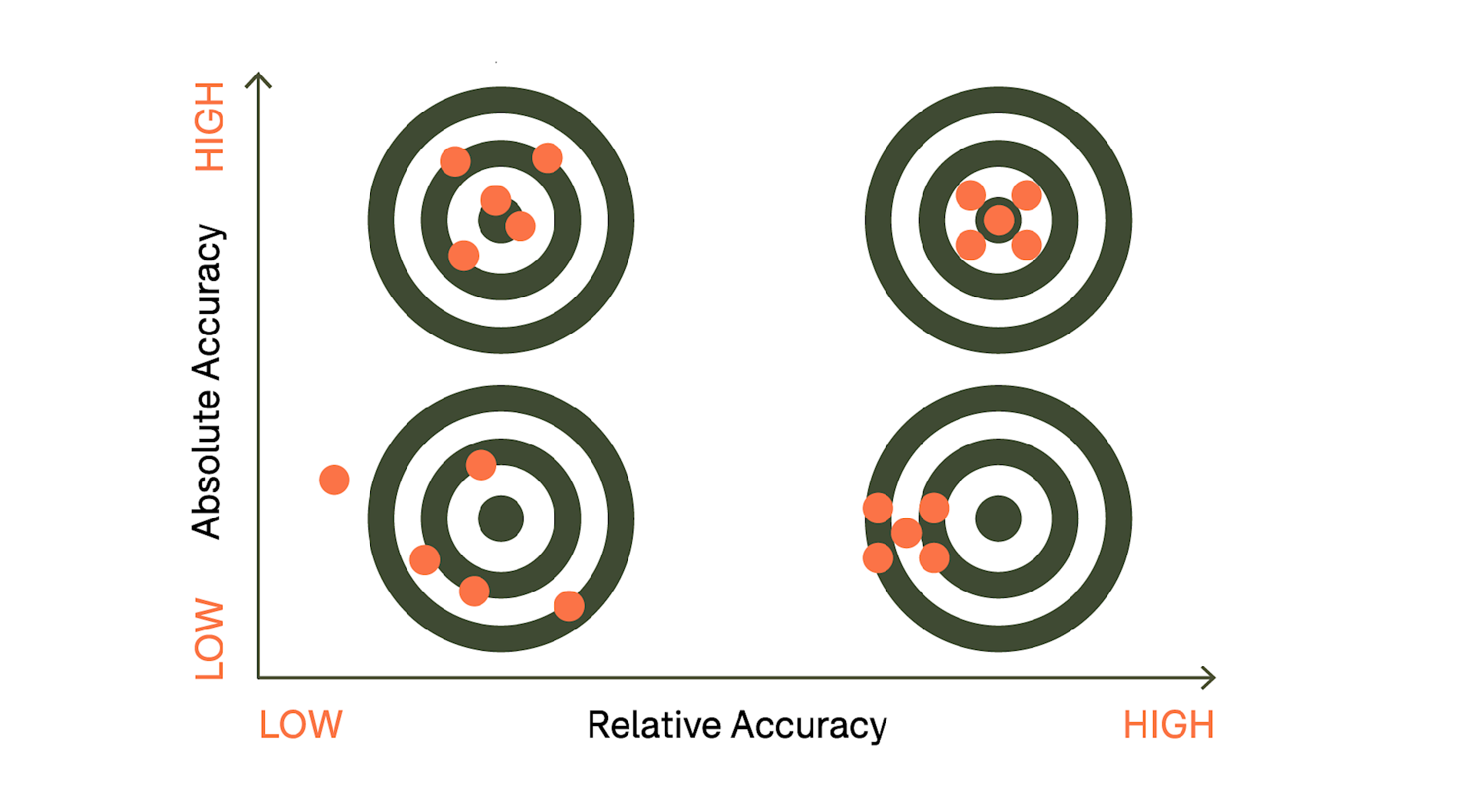
Figure 2 - Absolute and relative accuracy in shooting from Heliguy#
Congratulations! You have acquired the key elements needed to tackle metrology. Keep learning about metrology on one of the educational MIT website. You are now ready to either discuss with a metrology engineer or start characterising your sensor/instrument.
Sensor Performance Testing: DIY Characterization Procedures#
▶ Individual tests
It’s foolishness, adventure or scolarship that led you here, either way you have chosen to characterise your sensor by yourself welcome! Bear in mind that testing an instrument will test the entire construction (sensor + box + electronics), which should be designed and optimised beforehand.
1. Objective
This protocol defines testing procedures to evaluate the stability of a sensor before cetified calibration. Tests can be performed by the user with their own technical resources. The point of this protocole is to test how the instrument react and not its absolute accuracy.
2. Required Equipment
Sensor to be tested
Data acquisition system
Temperature measurement equipment (infrared thermometer, thermocouple)
Controlled environment or means to control ambient conditions
Laboratory notebook or digital documentation system
3. Stability Tests
3.1 Sensor noise and self-heating
Objective: Evaluate the influence of internal sensor heating on performance.
Procedure:
Measure sensor temperature before powering on (reference temperature)
Power on the sensor and begin measurements
Simultaneously record:
Sensor values
Sensor surface temperature (external measurement)
Ambient temperature
Continue measurements for at least 2 hours or until thermal stabilization
Data Analysis:
Plot temporal evolution of sensor temperature
Determine thermal stabilization time
Plot the sensor values, a rolling mean and a standard deviation.
3.2 Sensor Temporal Drift
Objective: Characterize evolution of sensor performance over time.
Procedure:
Phase 1 - Intensive monitoring (first week):
Perform daily reference measurements
Maintain constant test conditions
Document any anomalies or particular events
Phase 2 - Regular monitoring (first month):
Perform weekly control measurements
Compare to initial reference values
Phase 3 - Maintenance monitoring (long term):
Perform monthly checks
Adjust frequency based on observed drift amplitude
Data Analysis:
Plot temporal evolution of key characteristics
Calculate drift rate (unit/time)
Identify trends and behavioral changes
Estimate sensor lifetime
3.3 Measurement Repeatability
Objective: Quantify measurement dispersion under identical conditions.
Depending on the parameters, it may be difficult to obtain satisfactory results from this test due to the difficulty of accurately controlling the conditions. For example, it is costly to make a thermostatically controlled bath. The repeatability measurement will be difficult to obtain outside a metrological laboratory.
Procedure:
Stabilize environmental conditions (temperature, humidity, pressure)
Perform a minimum of 5 consecutive measurements under strictly identical conditions
Maintain a constant time interval between each measurement
Record all measured values
Data Analysis:
Calculate the arithmetic mean of measurements
Calculate standard deviation (σ) to quantify dispersion
Calculate coefficient of variation (CV = σ/mean × 100%)
Plot a temporal graph of measurements
4. Documentation and Report
4.1 Data to Record
For each test, document:
Date and time of measurements
Environmental conditions
Sensor configuration and acquisition parameters
Qualitative observations
Incidents or anomalies
4.2 Statistical Analysis
Present results in tables and graphs
Include measurement uncertainties
Compare to manufacturer specifications
Formulate usage recommendations
4.3 Conclusion
Summary of observed performance
Identification of sensor limitations
Recommendations for optimal use
Proposals for improvements or additional tests
5. References
Technical sensor specifications
Applicable standards (ISO, ASTM, etc.)
Manufacturer documentation
▶ Cross-comparison
Cross-comparison tests allow evaluating the global performance of a sensor and calibration protocol.
Global performance evaluation
With a team of people and different instruments that measure the same variable, repeat measurements in exactly the same conditions to compare the global performance of each individual instrument. One reference instrument should be defined at the beginning of the test.
Calibration protocol comparison
Calibration protocols can be different between laboratories or between two teams. The purpose of these tests is to verify that measurements in controlled conditions are not operator-dependent and to highlight any sensitivity in the calibration protocol.
Test procedure
Reference definition: Select a high-quality reference instrument with known accuracy
Controlled environment: Ensure all measurements are performed under identical conditions
Standardized protocol: Define clear measurement procedures that all operators must follow
Multiple operators: Have different team members perform the same measurements
Documentation: Record all measurement conditions, operator identities, and environmental factors
Statistical analysis: Compare results using appropriate statistical methods to identify significant differences
Expected outcomes
Performance ranking: Identify which instruments provide the most reliable measurements
Protocol validation: Confirm that calibration procedures are robust and reproducible
Operator effects: Detect any systematic biases introduced by different operators
Improvement recommendations: Suggest modifications to protocols or equipment based on findings
Defining Your Measurement Needs: A Specification Template#
You need in metrology depends on what you want to look at! Metrology should be viewed as a tool for optimising an instrument’s performance in relation to the user’s needs.
This section provides downloadable forms for metrological requirements definition. These documents help planning and documenting measurement needs and are partly based on this form from the Ifremer metrological laboratory.